OffNet Newsroom

Daily topic roundup

LLMs

Tuesday, October 20, 2026 · 6 stories, curated & summarized — click any story for the source.

AWS What's New awsdatabase

Grok 4.7 hits Amazon Bedrock in AWS GovCloud (US)

SpaceXAI's Grok 4.7 is now available on Amazon Bedrock within AWS GovCloud (US), targeting coding, agentic workflows, and knowledge work. This update improves mixed-document processing and repo-scale coding reliability with better planning and error recovery. It also enhances browser-use agents for tasks like form filling and portal navigation.

  • Grok 4.7 available in AWS GovCloud (US) via Amazon Bedrock
  • Improved repo-scale coding with planning and error recovery
  • Enhanced browser agents for form fills and portal navigation
  • Supports mixed-document handling for knowledge work
  • Accessible via Bedrock console and supported APIs

HOW IT WORKSGrok 4.7 Workflow Enhancements1Access via Bedrock Console2Process Mixed Documents3Plan Repo-Scale Coding4Execute Browser Tasks5Recover From Errors
Hacker News (100+ points) general

MiniMax Releases M3.1 Flash Model

MiniMax has introduced M3.1 Flash, a new entry in its model lineup. The release has generated significant discussion within the tech community, evidenced by over 460 points and nearly 200 comments on Hacker News.

  • MiniMax launches new model variant M3.1 Flash
  • High community engagement with ~460 HN points
  • Discussion focuses on model capabilities and positioning
GitHub Trending (daily) githubrepos ⚠ unverified date/source

Headroom cuts LLM token costs by compressing agent inputs locally

Headroom is a tool that compresses tool outputs, logs, files, and RAG chunks before they are sent to an LLM. It claims to reduce token usage by 20% for coding agents and up to 95% for JSON data while preserving answer quality. The compression logic runs locally on your machine, ensuring no raw data leaves your environment.

  • Reduces token costs by compressing inputs like logs, files, and RAG chunks before LLM processing
  • Offers library, proxy, and MCP server integration for Python and TypeScript environments
  • Claims 20% token savings for coding agents and 60-95% for JSON structures without loss of accuracy
  • Executes compression locally to maintain data privacy and prevent external transmission of raw content

Google has released EmbeddingGemma 2, an open-weight multimodal model built on the Gemma 4 architecture. Licensed under Apache 2.0, this compact model extends semantic capabilities beyond text to include code, images, video, and audio. It is specifically engineered to optimize retrieval-augmented generation workflows and support efficient on-device deployment.

  • Apache 2.0 license enables commercial use and integration without restrictive terms
  • Multimodal support covers code, images, video, and audio alongside standard text
  • Compact architecture targets efficiency for on-device and edge deployment scenarios
  • Designed to enhance semantic search and RAG pipeline performance

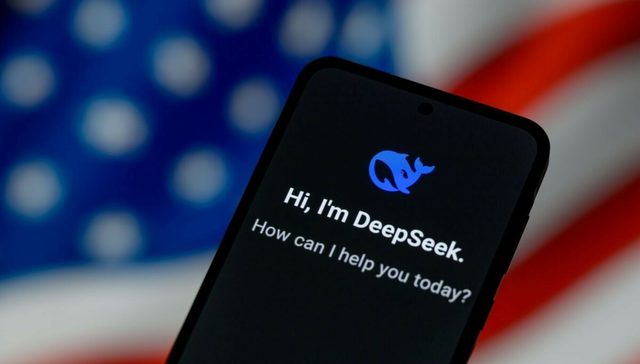
All US federal civilian agencies have issued orders prohibiting the use of the Chinese AI service DeepSeek. The directive is characterized by its broad scope and lack of specific technical guidelines, creating ambiguity for security teams. This move effectively shuts down access to the model within the federal civilian sector.

  • DeepSeek is now prohibited across all US federal civilian agencies
  • The ban order is broad and lacks specific technical compliance details
  • Vague directives create operational ambiguity for security and engineering teams
  • Federal compliance now explicitly excludes this specific Chinese AI service

Context-to-LoRA techniques compress documents into low-rank parameter updates to bypass long-context decoding, but existing methods struggle with fact retention and instruction adherence. Cache2LoRA addresses these limitations by using the specific query to aggregate evidence from a frozen document cache before generating the LoRA update. This approach improves the recovery of targeted facts and ensures answers remain aligned with response instructions.

  • Existing context-to-LoRA methods fail to reliably preserve facts or follow response instructions
  • Cache2LoRA uses query-specific evidence aggregation from a frozen cache to generate updates
  • Separating fact discrimination from target retention reveals key failure modes in prior work
  • Query-aware aggregation improves fact recovery without increasing update size
  • Instruction adherence requires explicit optimization beyond mere fact retrieval
HOW IT WORKSCache2LoRA Process Pipeline1Receive specific user query2Aggregate evidence from frozen cache3Generate low-rank parameter update4Apply update for internalization
↑