OffNet Newsroom

Archive snapshot

Monday, October 19, 2026

Daily signal on databases, AI, and the tech that matters.

24 new today 36 stories 8 sections 12 for the DBA desk

Database Technology 7

roundup ↗

SAG2 introduces a multi-hop retrieval architecture that eliminates the need for dense embeddings and complex database infrastructure. By leveraging a single SQLite database with BM25 lexical indexing, it shifts semantic evidence selection to query time. This approach removes dependencies on offline embedding computation and dedicated database servers, simplifying deployment while maintaining retrieval capabilities.

  • Eliminates offline embedding computation and dense index maintenance
  • Uses a single SQLite database instead of dedicated database servers
  • Shifts semantic evidence selection to query time using BM25 and JEV
  • Simplifies infrastructure by removing LLM-based event-entity extraction
  • Enables practical multi-hop retrieval without complex corpus preparation
TRADE-OFFSAG2 vs Traditional RetrievalTraditional ApproachRequires dense embeddingsNeeds dedicated database serversOffline embedding computationSAG2 ArchitectureUses SQLite and BM25No embedding infrastructureQuery-time evidence selectionvs

Amazon Redshift now supports long-term retention of system table data by natively integrating with Amazon S3 Tables in additional regions. This feature allows data to be automatically exported to Apache Iceberg format, bypassing the traditional seven-day storage limit for monitoring and audit logs. The service handles all partitioning and compaction tasks, removing the need for custom ETL pipelines to archive this data.

  • Extends system table data retention beyond the default 7-day window for compliance needs
  • Automatically exports data to S3 Tables in Apache Iceberg format
  • Eliminates custom ETL pipelines and reduces resource contention on production clusters
  • AWS manages partitioning, compaction, and retention policies natively

Fleet impact: Review Redshift cluster configurations to enable S3 Tables integration, eliminating brittle custom ETL scripts for long-term audit log retention while ensuring compliance data remains queryable without impacting production performance.

THE SHIFTExtended System Table Retention7 daysDEFAULT WINDOWLong-termS3 TABLESBypasses limit via native Iceberg integration

The pgBackRest community has released version 2.60.0 of their popular backup and restore tool for PostgreSQL. This update continues to support scalable, reliable backup infrastructure with features like parallel operations, incremental backups, and multi-cloud storage integration.

  • Latest stable release of pgBackRest for PostgreSQL backup management
  • Supports parallel backup/restore and incremental backup strategies
  • Includes ransomware protection and checksum validation capabilities
  • Compatible with S3, Azure, GCS, and SFTP storage backends
  • Enables backup from standby servers and partial backup resume

Fleet impact: For fleets running PostgreSQL on AWS RDS or Aurora, verify pgBackRest 2.60.0 compatibility with your current PostgreSQL versions and storage configurations. Check if the new ransomware protection and checksum validation features can enhance your existing backup strategy without performance impact.

CHECKLISTKey Features in pgBackRest 2.60Enable parallel backup and restore operationsImplement incremental backup strategiesAdd ransomware protection and checksum validationIntegrate with S3, Azure, GCS, and SFTPBackup from standby servers with resume

Hubert 'depesz' Lubaczewski investigates a claim that storing only changed columns in audit logs yields smaller tables but slower triggers. He notes the original post lacked schema details and test methodology, prompting a personal replication to verify the performance trade-offs.

  • Audit logging strategy: full-row vs. column-diff impacts storage and CPU
  • Original claim: column-diff logs are 5x smaller but trigger execution is slower
  • Reproduction requires specific schema context; original post omitted details
  • Performance tuning of audit triggers depends heavily on row width and change frequency

Fleet impact: Review audit trigger implementations on high-churn ExaCC or RDS tables to determine if column-diff logging introduces unacceptable CPU overhead compared to the storage savings.

TRADE-OFFAudit Logging Trade-OffsFull-Row LoggingFaster trigger executionLarger storage footprintColumn-Diff Logging5x smaller logsSlower trigger executionvs

PostgreSQL does not support the IF NOT EXISTS clause for CREATE POLICY, forcing developers to use alternative methods for idempotent migrations. A recent analysis compares three common workarounds on PostgreSQL 17 and 18, highlighting issues with locking behavior and race conditions. These findings are critical for teams managing Row-Level Security policies in automated deployment pipelines.

  • CREATE POLICY IF NOT EXISTS is unsupported in current PostgreSQL versions
  • Three alternative idempotent migration patterns were benchmarked on PG 17/18
  • Race conditions and locking gaps exist in naive IF NOT EXISTS workarounds
  • Automated RLS deployments require careful handling of concurrent policy creation

Fleet impact: DBAs managing Aurora PostgreSQL or RDS instances with Row-Level Security should audit migration scripts for race conditions during policy creation, as PostgreSQL lacks native IF NOT EXISTS support for policies.

The upcoming November 2026 PostgreSQL hacking workshop will feature Álvaro Herrera discussing the correct implementation of table repacking. Participants can register via the provided form to receive an invitation to the session.

  • November 2026 workshop focuses on best practices for PostgreSQL table repacking
  • Álvaro Herrera leads the discussion on correct repacking methodology
  • Registration required via form to secure a spot in the hacking workshop
HOW IT WORKSWorkshop Registration Steps1Find the registration form2Submit your details3Receive session invitation4Attend November 2026 workshop

LLMs 8

roundup ↗
Hacker News (100+ points) general

DeepSeek V4.1 Flash 1017 (Max) surfaces on Artificial Analysis

A new DeepSeek model variant, V4.1 Flash 1017 (Max), has been indexed on Artificial Analysis. The listing appears to be a specific checkpoint or configuration of the Flash architecture, drawing discussion on Hacker News regarding its benchmark positioning and potential efficiency gains.

  • New DeepSeek V4.1 Flash variant indexed on Artificial Analysis
  • Model name suggests a specific checkpoint or configuration
  • Community interest centers on benchmark positioning and efficiency
  • No detailed technical specs available in this snippet
CHECKLISTTracking the New DeepSeek VariantMonitor Artificial Analysis for full specsCompare benchmark scores against other Flash modelsWait for official DeepSeek documentationTrack community discussions on efficiency gains

Researchers demonstrate that the massive embedding tables in small language models can be replaced with a static, 16 MB binary vocabulary derived from principal-component projection. When training a Gemma-shaped model from scratch, this frozen table achieves comparable performance on reasoning benchmarks to a learned table, despite eliminating the need for trainable embedding parameters. The approach highlights that learned embeddings offer minimal validation loss improvement relative to their significant parameter and storage overhead.

  • Frozen 512-bit codes replace trainable embeddings, cutting parameter count significantly
  • Static vocabulary reduces model file size by removing the largest component in small LLMs
  • Performance parity on LAMBADA, HellaSwag, and PIQA suggests embeddings are overpriced
  • Binarization and PCA projection enable efficient derivation of the static vocabulary
  • Ideal for edge deployments where memory and parameter overhead are critical constraints
HOW IT WORKSDeriving Frozen Vocabulary1Project embeddings using PCA2Binarize into 512-bit codes3Create static 16 MB table4Replace trainable embedding parameters

Reducing routed experts during MoE prefill lowers serving costs but degrades short-answer QA performance. The authors show that at 50% expert capacity, F1 loss is primarily due to answer formatting errors rather than factual inaccuracy, as models fail to produce concise responses. Interventions reveal that damage concentrates on specific prompt positions, such as chat-template tokens or instruction prefixes, rather than being evenly distributed across all input tokens.

  • Prefill expert reduction causes answer-form failures, not factual hallucinations, in short-answer tasks
  • Damage is localized: chat-template tokens and instruction prefixes drive most of the F1 loss
  • Qwen3-30B-A3B loses ~50% of damage signal at two template tokens; DeepSeek-V2-Lite at first 8-32 tokens
  • Practitioners must monitor output length/formatting, not just accuracy, when tuning MoE prefill efficiency
CHECKLISTMoE Prefill Optimization ActionsMonitor output length and formattingProtect chat-template tokens from reductionWatch instruction prefixes for damageCheck specific token positions for loss
Hacker News (100+ points) general

Why self-hosted LLM proxies are critical for observability

The article argues that relying solely on external LLM APIs leaves engineers blind to actual model behavior and performance. By implementing a self-hosted proxy layer, teams can capture detailed request/response logs and monitor latency independently. This approach ensures transparency when provider-side metrics are insufficient or opaque.

  • External API metrics often lack granularity for debugging complex prompts
  • Self-hosted proxies enable full visibility into token usage and latency
  • Centralized logging helps detect provider-side degradation or changes
  • Proxies allow for consistent auditing of inputs and outputs across services
TRADE-OFFDirect APIs vs Self-Hosted ProxiesDirect External APIsOpaque provider-side metricsLack of granular debugging dataBlind to actual model behaviorSelf-Hosted Proxy LayerFull request/response visibilityIndependent latency monitoringCentralized audit logs for…vs

Clinical LLMs often rely on spurious features, such as gender tokens, which can drastically alter diagnosis predictions. Trajectory-Guided Steering (TGS) analyzes how model preferences evolve across layers to identify when and how to correct these biases. This method requires neither counterfactual data nor prior knowledge of the specific spurious features, offering a more robust inference-time correction.

  • Swapping single gender tokens can change irrelevant clinical diagnoses in up to 53.5% of cases
  • TGS uses layer-wise prediction trajectories to detect when correction is needed
  • Correction direction is determined without needing counterfactual data or feature labels
  • Approach validated on 16 clinical classification tasks from i2b2 datasets
BY THE NUMBERSGender Token Impact on Diagnosis53.5%Diagnoses altered by token swapSpurious features drastically change clinical predictions
GitHub Trending (daily) githubrepos ⚠ unverified date/source

mlabonne/llm-course trending: free roadmap for LLM science and engineering

A structured GitHub repository offering a free curriculum for mastering Large Language Models, divided into fundamentals, scientific research, and engineering applications. The course provides roadmaps and Colab notebooks to guide users from basic math and Python concepts through to deploying production-ready LLM systems.

  • Free, structured curriculum covering LLM math fundamentals, research techniques, and deployment
  • Includes practical Colab notebooks for hands-on experimentation and learning
  • Separates theoretical model building (Scientist) from practical app development (Engineer)
  • Companion 'LLM Engineer's Handbook' book covers end-to-end application design and deployment
HOW IT WORKSLLM Mastery Path1Master math fundamentals2Study research techniques3Experiment with Colab notebooks4Deploy production-ready systems
Hugging Face Blog llmaiml ↺ since 10-16

Meta releases Muse Spark Open, an open-weight multimodal MoE model

Meta has published Muse Spark Open, a frontier multimodal mixture-of-experts model available under open weights. The release provides direct access to the model architecture and parameters for community use and fine-tuning.

  • Open weights enable local deployment and custom fine-tuning without API restrictions
  • Mixture-of-experts architecture balances high performance with inference efficiency
  • Multimodal capabilities support both text and image processing tasks
  • Practitioners can inspect model internals for security and bias auditing
AWS What's New awsdatabase ↺ since 10-17

Reflection Beam open-weight model lands on SageMaker JumpStart and Trainium

Reflection's Beam, the company's first open-weight model, is now accessible via Amazon SageMaker JumpStart. The release emphasizes frontier-class performance in reasoning and coding tasks, enabling teams to build agentic workflows while maintaining data sovereignty. It is also optimized for AWS Trainium3, allowing users to integrate the model into existing SageMaker AI deployments with standard production controls.

  • Beam provides open-weight access to frontier-class reasoning and coding capabilities.
  • Integration with SageMaker JumpStart enables rapid deployment of agentic workflows.
  • Optimization for AWS Trainium3 offers a cost-effective training and inference path.
  • Data control and infrastructure management remain with the customer.
  • Supports scaling with existing SageMaker AI audit trails and monitoring features.
HOW IT WORKSBeam Deployment Pipeline1Access open weights via JumpStart2Deploy on optimized Trainium33Build agentic workflows4Maintain full data sovereignty5Monitor with SageMaker tools

AI / ML 1

roundup ↗

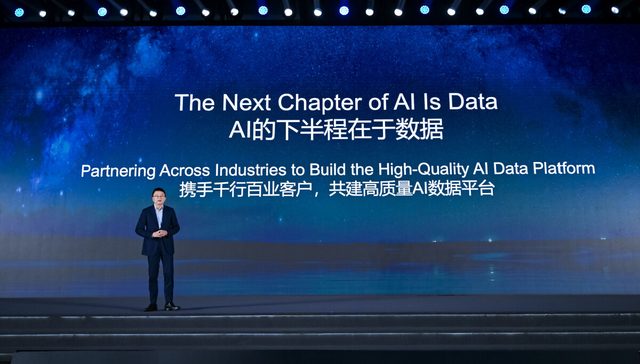
Huawei introduced the OceanStor M900, a Context Memory Storage platform designed to address memory constraints in large-scale AI inference. The system aims to improve the economic efficiency of running massive models by optimizing how contextual data is stored and accessed.

  • OceanStor M900 addresses the specific memory bottleneck in AI inference workloads
  • Platform is branded as Context Memory Storage for large-scale model support
  • Primary value proposition is improved economics for massive AI deployments

Agentic AI 6

roundup ↗
Hacker News (100+ points) general

Hybrid Reasoning Agents: Thinking in latent space, acting via text

A new research paper introduces Hybrid Reasoning Agents, a framework where LLMs perform internal reasoning directly in latent space rather than generating intermediate text tokens. This approach aims to improve efficiency and coherence by separating the cognitive processing phase from the final text-based action or output generation.

  • Shifts reasoning from text generation to latent space computation for potential efficiency gains
  • Separates internal thought processes from external text-based actions in agent workflows
  • Code and models available on GitHub and Hugging Face under Together Computer
  • Addresses limitations of text-only chain-of-thought by optimizing internal representation
  • High engagement on Hacker News suggests strong interest in agent architecture improvements
HOW IT WORKSHybrid Reasoning Agent Pipeline1Receive input task2Compute reasoning in latent space3Separate thought from action4Generate final text output

Grafana Labs proposes adapting traditional Site Reliability Engineering practices, specifically Service Level Objectives and error budgets, to monitor AI agents. This approach aims to provide a measurable framework for assessing whether these agents are performing correctly in production environments.

  • Applies proven SRE metrics (SLOs, error budgets) to the emerging field of AI agents
  • Provides a standardized method to quantify AI agent reliability and behavior
  • Bridges the gap between traditional observability and new AI-specific challenges
  • Enables teams to set concrete thresholds for acceptable AI agent performance
GitHub Trending (daily) githubrepos ⚠ unverified date/source

Orca: orchestrate multiple AI coding agents in isolated git worktrees

Orca is a desktop and mobile platform for running multiple AI coding agents concurrently. It isolates each agent in its own git worktree, allowing users to fan out prompts and compare results before merging the best output.

  • Run agents like Codex or Claude Code in parallel, isolated git worktrees
  • Fan a single prompt to multiple agents to compare and merge the best result
  • Mobile companion app allows monitoring and steering agents remotely
  • Supports various agents (Grok, Claude, OpenCode) using your own subscriptions

REALCLI introduces a unified evaluation framework for CLI agents that measures both task execution and the quality of human-agent collaboration. Unlike prior benchmarks that assume static instructions or ignore runtime interaction, REALCLI uses a five-dimensional framework with 51 scenario templates. It offers two modes: one with full upfront specifications and another where a scripted user provides incremental guidance during execution.

  • Measures collaboration quality, not just final task success
  • Uses 51 interaction scenarios to test dynamic user instruction delivery
  • Compares agents handling static specs vs. incremental human guidance
  • Addresses gap in evaluating long-horizon CLI agent workflows
TRADE-OFFStatic Specs vs Incremental GuidanceStatic SpecificationsFull upfront instructions providedNo runtime interaction neededTests basic task executionIncremental GuidanceScripted user provides feedbackTests collaboration qualityHandles dynamic instruction deliveryvs
arXiv cs.CL researchllm

AuditKIT: Unified evaluation spine for LLMs and agents

AuditKIT is a source-available library that consolidates benchmark accuracy, judge assessments, runtime performance, and tool-use behavior into a single result representation. It addresses fragmentation in evaluation interfaces by using direction-aware metric contracts and configuration fingerprints to ensure consistent comparisons across different models and backends. For agentic systems, the tool distinguishes between parallel and sequential execution and separates verified task outcomes from trajectory diagnostics.

  • Unifies disparate evaluation metrics into one standard result format
  • Separates parallel vs sequential tool execution for accurate agent tracing
  • Marks missing evidence as unscored to prevent silent failures in workflows
  • Uses configuration fingerprints to ensure reproducible benchmark comparisons
HOW IT WORKSAuditKIT Evaluation Pipeline1Define direction-aware metric contracts2Generate configuration fingerprints for…3Execute benchmarks and tool-use tests4Separate parallel from sequential agent…5Consolidate results into single…
arXiv cs.CL researchllm

Medical LLM Agents Fail 61% of Prompt Injection Tests

Research shows that medical multi-agent systems remain highly vulnerable to prompt injection, with a single malicious passage succeeding in up to 61% of cases. Standard defenses often fail because injected text can mimic legitimate clinical data. However, a simple verification step where agents cross-check inputs against patient findings significantly improves rejection rates.

  • Single injected passages achieve 61% attack success rates in medical LLM agents
  • Agent collaboration does not inherently provide security against prompt injection
  • Existing defenses struggle to distinguish malicious text from ordinary clinical notes
  • Cross-referencing injected text with patient findings enables effective rejection
  • Proposed defense is training-free and relies on verification prompts
BY THE NUMBERSHigh Vulnerability in Medical Agents61%Attack success rateSingle malicious passages bypass most defenses

Automation / DevOps / IaC 7

roundup ↗
The Register general

Critical KVM guest-to-host escape rated 9.3

A critical vulnerability in Linux KVM has been disclosed, allowing guests to escape into the host environment. Rated 9.3, this flaw potentially enables new attack vectors against Linux-based networking infrastructure.

  • CVSS 9.3 rating indicates severe impact on confidentiality and integrity
  • Guest-to-host escape bypasses virtualization isolation boundaries
  • Linux networking stacks may face novel exploitation paths
  • Immediate patching required for all KVM-based virtualization hosts

Buildkite has released pipeline-scoped secrets to tighten credential isolation and integrated Model Context Protocol tools that allow AI agents to validate configurations, diagnose build failures, and repair webhooks. The update also extends the GitHub Actions compatibility layer to support Linux arm64 and expands OpenTelemetry instrumentation in Buildkite Agent v4.1.0.

  • Pipeline-scoped secrets enforce least-privilege access by isolating credentials per pipeline
  • New MCP tools enable AI agents to autonomously diagnose and fix build and webhook errors
  • Linux arm64 support in GitHub Actions compatibility layer aids migration to ARM infrastructure
  • Agent v4.1.0 provides expanded OpenTelemetry data for deeper CI observability

Uber built an automated system to correlate upstream and downstream failures by leveraging RPC middleware and production metrics. This method overcomes the limitations of sampled distributed tracing, which often misses rare failure scenarios in large-scale environments. The system categorizes dependencies into fail-close, fail-open, or unknown states to improve resilience planning.

  • Uses RPC middleware and metrics instead of relying solely on sampled tracing
  • Classifies dependencies as fail-close, fail-open, or unknown for better isolation
  • Addresses blind spots in detecting rare failures across large service meshes
  • Enables automated correlation of caller and downstream service failures
HOW IT WORKSAutomated Dependency Analysis Pipeline1Capture RPC middleware signals2Correlate upstream and downstream metrics3Identify rare failure patterns4Classify dependency behavior state
The Register general ↺ since 10-18

Leap seconds abolished to prevent IoT time sync failures

Time authorities have decided to stop inserting leap seconds, citing the difficulty of updating IoT devices as a primary driver. This move aims to prevent widespread synchronization errors that could arise from legacy hardware unable to handle time adjustments.

  • Leap seconds are officially discontinued to protect IoT infrastructure
  • Legacy devices struggle to process time adjustments reliably
  • Decision mitigates risk of widespread synchronization failures
  • Focus shifts to continuous timekeeping rather than discrete jumps
AWS What's New awsdatabase ↺ since 10-16

AWS Lambda Durable Execution SDK for Go reaches GA

AWS has released the general availability of the Go SDK for Lambda Durable Execution, allowing developers to build long-running workflows without custom state management. The SDK provides native Go primitives for checkpointing progress and pausing execution for up to a year while waiting for external events. This simplifies the creation of complex applications like deployment pipelines and human-in-the-loop AI workflows.

  • Enables Go developers to build resilient, long-running Lambda workflows natively
  • Automatically checkpoints progress, removing need for custom state tracking code
  • Supports pausing execution for up to one year while waiting for external events
  • Ideal for infrastructure automation, deployment rollouts, and human review gates
  • Extends Lambda's event-driven model with durable, stateful operation support
HOW IT WORKSDurable Execution Workflow Steps1Start long-running Lambda function2Checkpoint progress automatically3Pause for external events4Resume upon event arrival5Complete workflow statefully
AWS What's New awsdatabase ↺ since 10-16

AWS ARC Region switch adds SSM Run Command, Lambda payloads, and health checks

Amazon Application Recovery Controller (ARC) Region switch now supports four new orchestration capabilities for multi-Region failover. The update introduces an AWS Systems Manager Run Command execution block for invoking commands on managed instances during failover, alongside Lambda execution blocks that accept custom payloads. Additional features include service quota parity checks and a wait-for-target-group-health mechanism for compute scaling actions.

  • Execute SSM Run Command actions on managed instances directly within failover plans
  • Pass custom payloads to Lambda execution blocks for tailored failover logic
  • Validate service quota parity across Regions to prevent post-failover limits
  • Gate compute scaling actions on target group health checks to ensure stability
  • Plan evaluation now verifies command document targets and IAM permissions automatically
HOW IT WORKSEnhanced Failover Orchestration Steps1Validate quota parity across regions2Execute SSM Run Command actions3Trigger Lambda with custom payloads4Wait for target group health5Scale compute resources safely
The Register general ↺ since 10-18

Ryan Dahl joins Cloudflare to open-source Workers, leaving Deno behind

Ryan Dahl, the creator of Node.js and Deno, has joined Cloudflare following the company's acquisition of his Deno startup. Dahl is now tasked with developing an open-source implementation of Cloudflare Workers. He argues that traditional server architecture is flawed and aims to reshape edge computing standards.

  • Cloudflare acquired Deno, signaling a major shift in the JavaScript runtime landscape
  • Dahl's new role focuses on open-sourcing Cloudflare Workers technology
  • Practitioners should watch for potential convergence of edge and serverless runtimes
  • Dahl's critique of current server models suggests upcoming architectural changes

AWS 5

roundup ↗
AWS What's New awsdatabase ↺ since 10-16

AWS Transform adds Aurora PostgreSQL cross-region deployment in 7 new Regions

AWS Transform for Windows modernization now supports deploying converted Aurora PostgreSQL clusters to different AWS Regions than the source SQL Server instance. This update, available in seven additional Regions, allows engineers to specify a target Region during the transformation plan to meet data residency or disaster recovery goals. The tool simultaneously updates dependent .NET application code, including connection strings and data-access layers, to ensure compatibility with the new PostgreSQL endpoints.

  • Enables geographic separation of source SQL Server and target Aurora PostgreSQL during modernization
  • Supports compliance and DR by allowing cross-region deployment of transformed databases
  • Automates .NET application updates for PostgreSQL connectivity and ORM compatibility
  • Available in seven additional AWS Regions to broaden modernization coverage

Fleet impact: For DBAs managing mixed Oracle/PostgreSQL estates, this facilitates compliant SQL Server-to-Aurora migrations by decoupling source and target regions. Verify cross-region latency tolerances and ensure RDS parameter groups are tuned for the specific target Region's Aurora PostgreSQL version.

HOW IT WORKSCross-Region Modernization Pipeline1Select target Region in plan2Deploy Aurora PostgreSQL cluster3Update .NET connection strings4Ensure ORM compatibility automatically
InfoQ generaldevops ↺ since 10-18

AWS previews Well-Architected Agent for automated infra analysis

AWS has launched a preview of the Well-Architected Agent, an AI-driven service that evaluates cloud environments against established best practices. The tool generates prioritized recommendations focused on cost, security, performance, and reliability. Additionally, it offers specific remediation steps and can review infrastructure-as-code templates prior to deployment.

  • Automates environment checks against AWS Well-Architected pillars
  • Prioritizes recommendations by cost, security, performance, and reliability
  • Provides actionable remediation steps rather than just findings
  • Integrates IaC review to catch issues before deployment
  • Currently available in preview mode
AWS What's New awsdatabase ↺ since 10-17

AWS Lambda durable functions now live in GovCloud (US) Regions

AWS has expanded Lambda durable functions to GovCloud (US-West and US-East), bringing checkpointing and automatic recovery capabilities to regulated environments. These primitives allow developers to build reliable multi-step workflows and AI pipelines without incurring compute charges during wait periods. The update enables government and regulated industries to orchestrate complex processes while maintaining strict compliance standards.

  • Enables checkpointing and auto-recovery for multi-step apps in GovCloud
  • New primitives like 'step' and 'wait' pause execution without compute charges
  • Supports regulated industries building AI workflows and order processing
  • Available in both US-West and US-East GovCloud regions
HOW IT WORKSDurable Function Workflow1Start multi-step workflow2Execute step logic3Pause on wait primitive4Zero compute charges accrue5Resume automatically on event
AWS What's New awsdatabase ↺ since 10-17

AWS Transform adds Azure-to-AWS .NET code conversion

AWS has released general availability for a new feature in AWS Transform that automatically converts Azure SDK calls to AWS SDK equivalents in .NET applications. The tool scans submitted source code to identify Azure services, such as Cosmos DB or Functions, and maps them to corresponding AWS resources like DynamoDB or Lambda. Users can review and adjust the suggested conversion mappings in the assessment report before executing the final modernization plan.

  • Automates migration of Azure-native .NET apps to AWS by swapping SDK calls
  • Maps specific services like Azure Functions/Cosmos DB to Lambda/DynamoDB
  • Provides an assessment report allowing manual adjustment of conversion logic
  • Targets cloud-native codebases to reduce manual refactoring effort
HOW IT WORKSAzure to AWS Conversion Process1Scan source code for Azure SDKs2Map services to AWS equivalents3Review assessment report mappings4Adjust conversion logic manually5Execute final modernization plan
InfoQ generaldevops ↺ since 10-18

AWS tests EU Sovereign Cloud isolation from global backbone

AWS will disconnect its European Sovereign Cloud from the global network backbone on October 24. The exercise relies exclusively on EU-resident staff and local infrastructure to demonstrate operational independence. While AWS states that neither severed system is operation-critical, industry experts remain skeptical about whether this test adequately addresses customer sovereignty concerns.

  • AWS validates EU cloud autonomy by cutting global backbone links for several hours
  • Operations during the test rely strictly on EU-based personnel and local hardware
  • AWS claims the isolated systems are non-critical, but customer trust remains unproven
  • Practitioners question if a temporary severance truly proves sovereign capability

Oracle Ecosystem 1

roundup ↗
AWS What's New awsdatabase ↺ since 10-16

Oracle Database@AWS enables aggregate and default route peering

Oracle Database@AWS (ODB) now permits advertising aggregate CIDR blocks and default routes (0.0.0.0/0) during network peering configuration. This change eliminates the requirement to manually list every individual network CIDR that needs access to the ODB environment. Network administrators can now use a single broad route to cover all connected VPCs and on-premises networks, significantly simplifying connectivity management.

  • Advertise 0.0.0.0/0 or large aggregates to simplify ODB peering setup
  • Eliminates manual CIDR updates when adding new VPCs or on-prem networks
  • Supports broad routing via AWS Transit Gateway without per-network configuration
  • Reduces operational overhead for complex hybrid network topologies

Fleet impact: DBAs managing hybrid Oracle workloads can streamline network provisioning by using default routes instead of maintaining exhaustive CIDR lists for peering. Verify security groups and NACLs remain tightly scoped, as broader routing increases the potential attack surface for ODB endpoints.

WORTH QUOTINGThe gist“Oracle Database@AWS (ODB) now permits advertising aggregateCIDR blocks and default routes (0.0.0.0/0) during networkpeerin…— AWS What's New

Emerging Tech & Research 1

roundup ↗
Hacker News (100+ points) general

Linux Kernel 7.3 Ships to Mainline

The Linux kernel version 7.3 has officially been released into mainline. This update follows the standard development cycle and is now available for distribution integration and testing.

  • Kernel 7.3 is now available in mainline for distribution packaging
  • Monitor distro repositories for backported security and stability fixes
  • Review changelog for specific hardware support or subsystem changes
  • Plan maintenance windows for fleet upgrades to the new kernel version
CHECKLISTKernel 7.3 Upgrade StepsMonitor distro repos for fixesReview changelog for hardware changesPlan maintenance windows for fleetVerify subsystem compatibility before rollout
↑